
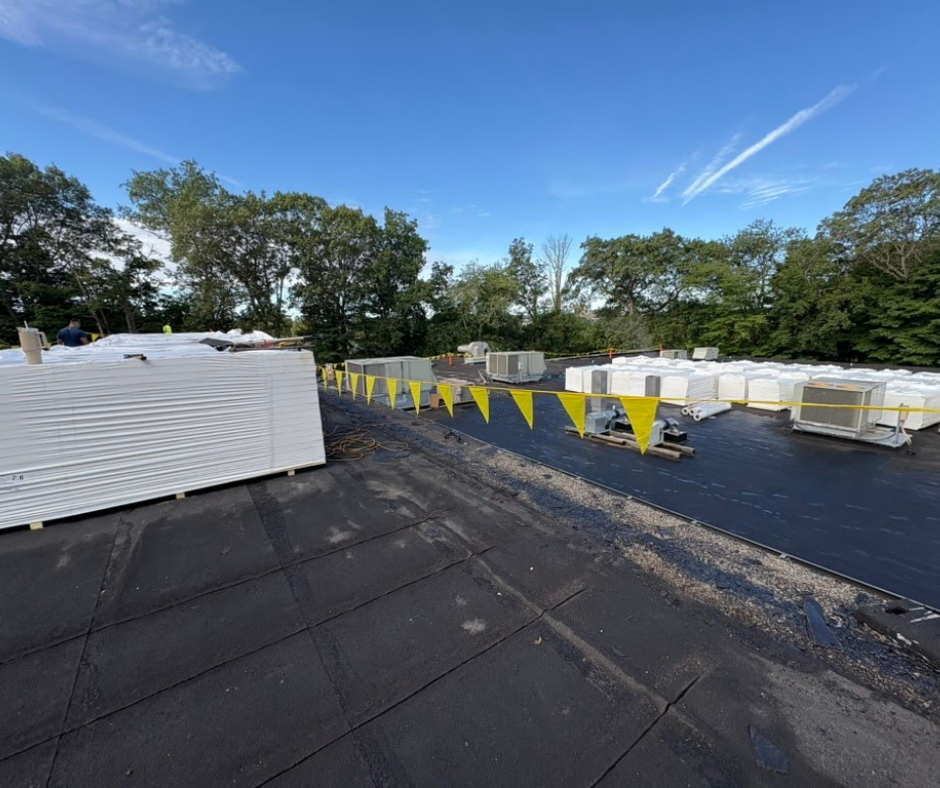
TPO vs. EPDM vs. PVC Roofing: Which Is Right for Your Building?
If your flat or low-slope commercial roof needs replacing, you’re likely facing three main options: TPO, EPDM, or PVC. All three are single-ply membrane systems, and all three are proven, widely used materials, but they perform differently, cost differently, and suit different buildings. Choosing the wrong one for your situation can mean paying more in energy costs, dealing with premature seam failures, or replacing a roof years before you should have needed to.
Here’s a clear, practical breakdown of each.
The Short Answer
- Choose TPO if you want an energy-efficient, reflective membrane at a moderate cost, the most commonly installed commercial roofing system today.
- Choose EPDM if you want the most cost-effective, proven long-term option with the longest track record in the industry.
- Choose PVC if your building has chemical, grease, or heavy foot-traffic exposure, or if maximum long-term durability matters more than upfront cost.
Now let’s look at why.
TPO (Thermoplastic Polyolefin)
TPO has become the most widely installed commercial roofing membrane in North America over the past decade, largely because of its reflective white surface and competitive pricing.
Cost: $5.00–$10.00 per square foot installed. Lifespan: 15–25 years. Seams: Heat-welded, significantly stronger than adhesive-based seams, and heat-welded seams consistently outperform in wind uplift testing
Why property owners choose it: TPO’s white reflective surface reduces cooling costs meaningfully compared to a standard black membrane — commonly cited savings run 10–30% on cooling costs for a given building. For a mid-size commercial building, that can translate into thousands of dollars in annual energy savings, which can offset TPO’s higher upfront cost compared to EPDM over the life of the roof.
Because seam failure is the single most common cause of commercial roof leaks, TPO’s heat-welded seam technology is a real practical advantage; it produces a stronger, more consistent bond than tape or adhesive seaming.
Consider TPO if: Your building has significant rooftop HVAC load, cooling costs are a real budget concern, or you want a modern, energy-efficient system with a strong seam technology.
EPDM (Ethylene Propylene Diene Monomer)
EPDM — commonly called “rubber roofing, has been used in commercial roofing for more than 50 years, making it the most time-tested single-ply membrane on the market.
Cost: $4.00–$10.00 per square foot installed (often the most budget-friendly of the three). Lifespan: 25–30+ years with proper maintenance. Seams: Traditionally adhesive or tape-based, though this is less durable in wind-uplift testing than heat-welded seams
Why property owners choose it: EPDM has an exceptional long-term track record; it performs reliably under extreme temperatures, UV exposure, hail, and repeated freeze-thaw cycling, which matters significantly in Connecticut’s climate. It’s also one of the easiest membranes to repair; patches and adhesive repairs are straightforward and extend the roof’s life at low cost, which keeps long-term maintenance costs down.
The one tradeoff: standard black EPDM absorbs heat, which can increase cooling costs compared to a reflective membrane like TPO. White EPDM is available and closes this gap, but it costs more than standard black EPDM.
Consider EPDM if: Budget predictability matters, your building doesn’t have major cooling-cost sensitivity, or you want the membrane with the longest proven track record in real-world conditions, particularly relevant for Connecticut’s freeze-thaw winters.
PVC (Polyvinyl Chloride)
PVC is the premium option of the three, a rigid, highly durable membrane known for exceptional resistance to chemicals, grease, and heavy wear.
Cost: $6.00–$12.00 per square foot installed (typically the highest upfront cost). Lifespan: 20–30+ years, often with the strongest warranty options, frequently backed by lifetime warranties from manufacturers. Seams: Heat-welded, similar to TPO, but with enhanced overall durability
Why property owners choose it: PVC is essentially mandatory for restaurants and any building with rooftop grease exposure from kitchen exhaust, since standard TPO and EPDM membranes can degrade when exposed to oils and grease. It also holds up exceptionally well under heavy foot traffic, making it a strong choice for buildings with frequent rooftop equipment servicing. Many PVC systems are prefabricated off-site to exact building measurements, which produces stronger seams and a more precise fit during installation.
Consider PVC if: Your building has a restaurant, food service tenant, or any grease/chemical exposure on the roof; you expect heavy foot traffic; or you’re planning to own the building long-term and want to minimize lifetime maintenance costs, even at a higher upfront price.
Side-by-Side Comparison
| Factor | TPO | EPDM | PVC |
|---|---|---|---|
| Installed cost per sq ft | $5.00–$10.00 | $4.00–$10.00 | $6.00–$12.00 |
| Typical lifespan | 15–25 years | 25–30+ years | 20–30+ years |
| Seam type | Heat-welded | Adhesive/tape | Heat-welded |
| Energy efficiency | High (reflective) | Moderate (higher if white) | High (reflective) |
| Chemical/grease resistance | Low–Moderate | Low | High |
| Best for | Energy savings, modern buildings | Budget, long-term proven performance | Restaurants, heavy traffic, max durability |
A Note on Total Cost of Ownership
The cheapest option upfront isn’t always the cheapest option over the life of the roof. When comparing TPO, EPDM, and PVC, factor in:
- Energy costs — a reflective membrane can meaningfully reduce cooling costs over a 20+ year lifespan
- Maintenance costs — every membrane requires regular inspection and minor repair to reach its full rated lifespan; skipping maintenance shortens all three equally
- Warranty terms — compare not just material warranty length, but whether it covers labor and what maintenance requirements are needed to keep it valid
A membrane installed poorly will fail faster than a lower-tier membrane installed correctly; installation quality matters as much as material choice.
Get Expert Guidance for Your Building
Choosing between TPO, EPDM, and PVC isn’t a one-size-fits-all decision; it depends on your building’s use, your budget, your cooling costs, and how long you plan to hold the property. At Fulcrum Contracting, we assess your specific building and give you a straightforward recommendation based on what actually makes sense for your situation, not a one-size answer.
📞 Call (203) 408-6057 to discuss the right commercial roofing membrane for your building.